Nigerien cuisine is built on the staples of the Sahel: millet, sorghum, rice, beans and groundnuts, enriched with leafy greens, spices and grilled meat. It is generous, filling and designed for a hot climate. In Niamey you will find everything from family-style rice dishes to street-side brochettes and the famous spiced dried meat called kilishi. This guide introduces the dishes and drinks worth knowing, with tips on where and how to enjoy them safely.
The staples of Nigerien cooking
Rice is probably the most common carbohydrate in Niger today, especially in towns, while millet remains central in rural areas and in traditional dishes. Sorghum, cassava and plantain also appear. Meals are typically built around a starch served with a sauce made from vegetables, leaves, groundnuts or tomatoes, with meat or fish when available.
Dishes to try
Dambou
A speciality of southern Niger, where the Zarma and Songhai peoples are most numerous. Rice flour or millet is steamed, then mixed with moringa or spinach leaves, onions, chilli and seasoning. The result is light, green and fragrant, often served with a little oil and a side of meat or groundnuts.
Kilishi
Kilishi is a Hausa word for thin slices of meat, usually beef or boneless mutton, that are dried and spiced. There are two main types: ja, coated in a red paste of groundnuts and spices, and rumuzu, plainer and prepared with groundnut oil. Production centres are mostly in the south of the country, including Madaoua and Guidan-Roumdji, and kilishi is easy to find in Niamey. It is a popular snack and a classic souvenir.
Rice with sauce
The everyday lunch for many people in Niamey: white rice with a tomato and onion sauce, a groundnut sauce, or a sauce of leaves, often with beef, mutton, chicken or fish. Jollof-style rice cooked in tomato sauce, more closely associated with Nigeria, is also widely available.
Millet dishes: tuo and fura
Thick millet or sorghum porridge, often called tuo or boule, is eaten with a sauce. Fura is a drink-food made from millet balls mixed with soured milk, refreshing and filling in the heat. Ask whether the milk is pasteurised before trying it.
Kopto
A salad of cooked moringa leaves, sometimes mixed with groundnut cake, onion and spices. Moringa trees grow throughout the Sahel and their leaves are prized for their nutritional value.
Brochettes and grilled meat
Skewers of grilled beef, mutton or liver, seasoned with spices and served with onions and chilli, are a favourite evening food in Niamey. At Hotel Gaweye, the poolside barbecue & pizzeria serves brochettes in the evening.
Masa and fried snacks
Small fermented rice or millet cakes cooked in special pans, along with bean fritters and fried dough, are common breakfast and street snacks.
What to drink
- Bissap: a deep-red infusion of hibiscus flowers, served chilled and sweetened.
- Ginger juice: sharp, spicy and very refreshing.
- Tea: green tea with sugar, often with mint, prepared in small pots and served in several rounds. Sharing tea is an important social ritual across the Sahel.
- Bottled water: drink sealed bottled or properly treated water only.
Food safety tips
| Do | Avoid |
|---|---|
| Choose freshly cooked, hot food | Food that has been standing at room temperature |
| Drink sealed bottled water | Tap water and ice of unknown origin |
| Peel fruit yourself | Raw salads in places where hygiene is uncertain |
| Ask whether dairy is pasteurised | Unpasteurised milk products if you have a sensitive stomach |
| Wash or sanitise hands before eating | Eating with unwashed hands, especially when sharing a dish |
Table etiquette
- Eat and pass food with your right hand; the left hand is considered unclean.
- When sharing a common dish, eat from the part in front of you.
- Alcohol is not part of most Nigerien meals; follow your hosts' lead.
- During Ramadan, avoid eating or drinking in public during daylight hours out of respect.
- Accepting tea when offered is polite; three rounds are traditional.
Our guide to money, language and etiquette in Niger has more cultural tips.
Where to eat in Niamey
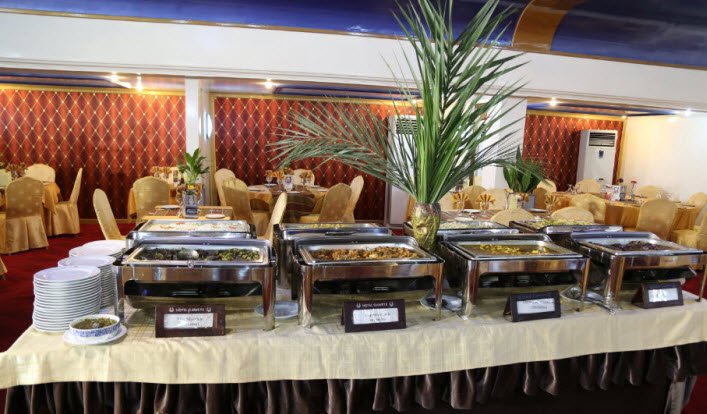
For visitors, especially on short or work trips, hotel restaurants are often the simplest and safest choice. At Hotel Gaweye, La Potinière serves a breakfast buffet, a daily lunch buffet and à la carte dishes in an air-conditioned room for up to 150 guests, while the Bar Rive Gauche serves tea and drinks. If you explore further, go with someone who knows the city and favour busy places where food is cooked to order.
Regional variety
Niger is a vast country, and its cuisine varies from region to region. In the south-west around Niamey, Zarma and Songhai dishes such as dambou dominate. In the Hausa regions of the south and centre, around Maradi and Zinder, millet and sorghum porridges, bean dishes and grilled meat are central, and Hausa food culture shares much with northern Nigeria. In the north, Tuareg and Arab traditions bring dishes based on millet, dates, milk and meat suited to nomadic life, and tea is prepared with particular ceremony. Along the Niger River, fish plays a bigger role than elsewhere.
Food and the calendar
Food also follows the rhythm of the year. During Ramadan, families break the fast at sunset with dates, water, porridges and fritters, followed by a larger meal. At Tabaski (Eid al-Adha), many families sacrifice a sheep, and grilled and stewed mutton is shared with relatives and neighbours. Mango season, at the end of the dry season, fills the markets with fruit.
Frequently asked questions
What is the national dish of Niger?
There is no single official dish, but rice with sauce, millet porridge with sauce, dambou and kilishi are among the most typical.
Is Nigerien food spicy?
Many dishes use chilli, but heat is often added at the table. Ask for "pas trop pimenté" if you prefer milder food.
Can I bring kilishi home?
Kilishi is a popular souvenir, but many countries restrict meat imports. Check your home country's customs rules first.
What is a typical breakfast in Niamey?
Many people eat millet or rice porridge, bean fritters or bread with tea. Hotel buffets add international options such as eggs, pastries and fruit.
Conclusion
From green dambou and spiced kilishi to chilled bissap and rounds of sweet tea, Nigerien food is a direct way into the culture of the Sahel. Eat with curiosity, follow basic food-safety rules and respect local customs, and you will discover a cuisine that is far more varied than its simple ingredients suggest.
Planning a stay in Niamey? Discover Hotel Gaweye's rooms, restaurants and meeting rooms by the Niger River.
Hôtel GaweyeRooms & suites