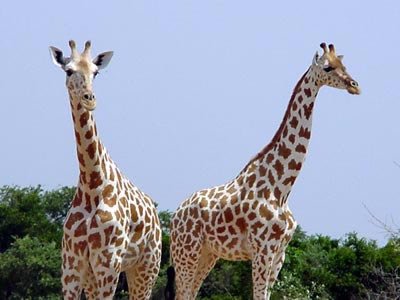
About 60 kilometres east of Niamey, in a landscape of farmland and patchy "tiger bush", lives the last population of wild giraffes in West Africa. The West African giraffe, a subspecies found nowhere else, came close to extinction in the 1990s. Its recovery around the rural community of Kouré is one of the most remarkable conservation stories in the Sahel. This article tells that story, explains how local people and conservationists work together, and sets out why visiting is now restricted.
Travel advisory (October 2026): the US State Department rates Niger Level 4 – Do Not Travel, and the UK Foreign, Commonwealth & Development Office advises against all travel to Niger, including Niamey. Several other governments give similar advice. Check your own government's latest guidance, and your travel insurance, before planning any trip.
A unique subspecies
The West African giraffe (Giraffa camelopardalis peralta) is lighter in colour than its East and Southern African cousins, with pale, rusty-orange patches. Once spread across the Sahel from Senegal to Lake Chad, it disappeared from country after country during the twentieth century because of hunting, drought and the loss of its habitat. Today the wild population survives only in Niger, with most animals in the "giraffe zone" east of the capital.
From 49 giraffes to several hundred
In 1996, only 49 West African giraffes were left. Protection measures introduced in the following years, combined with the support of local communities, allowed the population to grow steadily. Niger's environment ministry reported 664 giraffes around Kouré in 2019, and conservation organisations have since estimated roughly 690 animals in the country. This recovery led to the subspecies being downlisted from Endangered to Vulnerable on the IUCN Red List in 2018.
| Year | Milestone |
|---|---|
| 1996 | Population falls to 49 individuals |
| 2018 | New satellite population established in the Gadabedji Biosphere Reserve; IUCN downlisting to Vulnerable |
| 2019 | 664 giraffes counted in the Kouré area, according to Niger's environment ministry |
| 2020s | Around 690 giraffes estimated in Niger |
Why Kouré?
Unusually, the giraffes do not live in a fenced national park. They share the land with farmers and herders, browsing on trees in the tiger bush, a pattern of vegetation strips typical of the Sahel, and moving between villages and fields. Their survival depends on people accepting them, even though giraffes can damage crops.
Communities at the heart of conservation
The Association to Safeguard Giraffes in Niger (ASGN) and its partners have supported villages with boreholes, cereal banks, grain mills, seeds and fertiliser, so that protecting the giraffes brings tangible benefits. Local guides were trained, and before the security situation worsened, visitor fees provided income for the communities.
Threats that remain
- Habitat loss: the tiger bush is being cleared for farmland and firewood.
- Climate: drought reduces the trees and water the giraffes depend on.
- Isolation: a single population is vulnerable to disease or disaster, which is why a second population was created in Gadabedji in 2018.
- Insecurity: the loss of tourism income and difficult access for conservation teams.
The 2020 attack and current access
On 9 August 2020, six French aid workers and their Nigerien guide and driver were killed in the Kouré area by armed men. The attack shocked Niger and the conservation community, and the area was closed to visitors. Today, foreigners need official authorisation and military escorts to travel outside Niamey, and governments advise against travel to Niger. A visit to Kouré should not be part of any itinerary under current conditions.
How to support the giraffes from afar
- Learn about and support recognised organisations working on giraffe conservation in Niger.
- Share accurate information about the subspecies and its recovery.
- Visit the National Museum in Niamey, whose zoo and exhibits introduce the wildlife of Niger.
Giraffes and people: living side by side
What makes Kouré special is the coexistence between wildlife and farming communities. Giraffes wander between villages, browse acacia and combretum trees and sometimes cross the main road. In the rainy season they may feed on crops such as cowpea leaves or mango trees, which can create tension with farmers. Conservation programmes therefore focus on benefits for villagers, from microcredit to tree planting, so that people see the giraffes as an asset rather than a nuisance.
Researchers have studied the giraffes' movements, social behaviour and use of habitat, often with the help of local guides who can recognise individual animals by their coat patterns. This knowledge helps to plan where to protect or restore vegetation, and how to reduce conflicts.
A lesson for the Sahel
The recovery of the West African giraffe shows that conservation can work even outside fenced parks and in one of the world's poorest regions, when communities are involved and benefits are shared. It also shows how fragile such success can be when insecurity cuts off visitors, funding and access for field teams.
Giraffes in Nigerien culture
The giraffe has become a symbol of Niger's natural heritage, appearing in national imagery and in the work of local artists and craftspeople. Giraffe motifs can be found on fabrics, carvings and paintings sold in Niamey. Choosing these items, rather than products made from wildlife, is a simple way for visitors to celebrate the animals while supporting local artisans.
Frequently asked questions
How many West African giraffes are left?
Recent estimates put the population at around 690 animals in Niger, up from 49 in 1996.
Where exactly is Kouré?
Kouré is a rural community about 60 kilometres east of Niamey, along the road towards Dosso.
Can tourists visit the giraffes today?
Access is restricted, foreigners need authorisation and escorts outside Niamey, and the area has seen a deadly attack. Visits are not recommended.
Why are West African giraffes lighter in colour?
Their pale, rusty patches are a characteristic of the subspecies Giraffa camelopardalis peralta, which distinguishes it from other giraffes.
Conclusion
The giraffes of Kouré show what is possible when local communities and conservationists work together: a subspecies brought back from fewer than fifty animals to several hundred. Until security improves, the best way to celebrate that success is from a distance, by learning, sharing and supporting the people who protect them. Read more about the region in our article on the Niger River at Niamey and on the French page Le Niger.
Planning a stay in Niamey? Discover Hotel Gaweye's rooms, restaurants and meeting rooms by the Niger River.
Hôtel GaweyeRooms & suites